
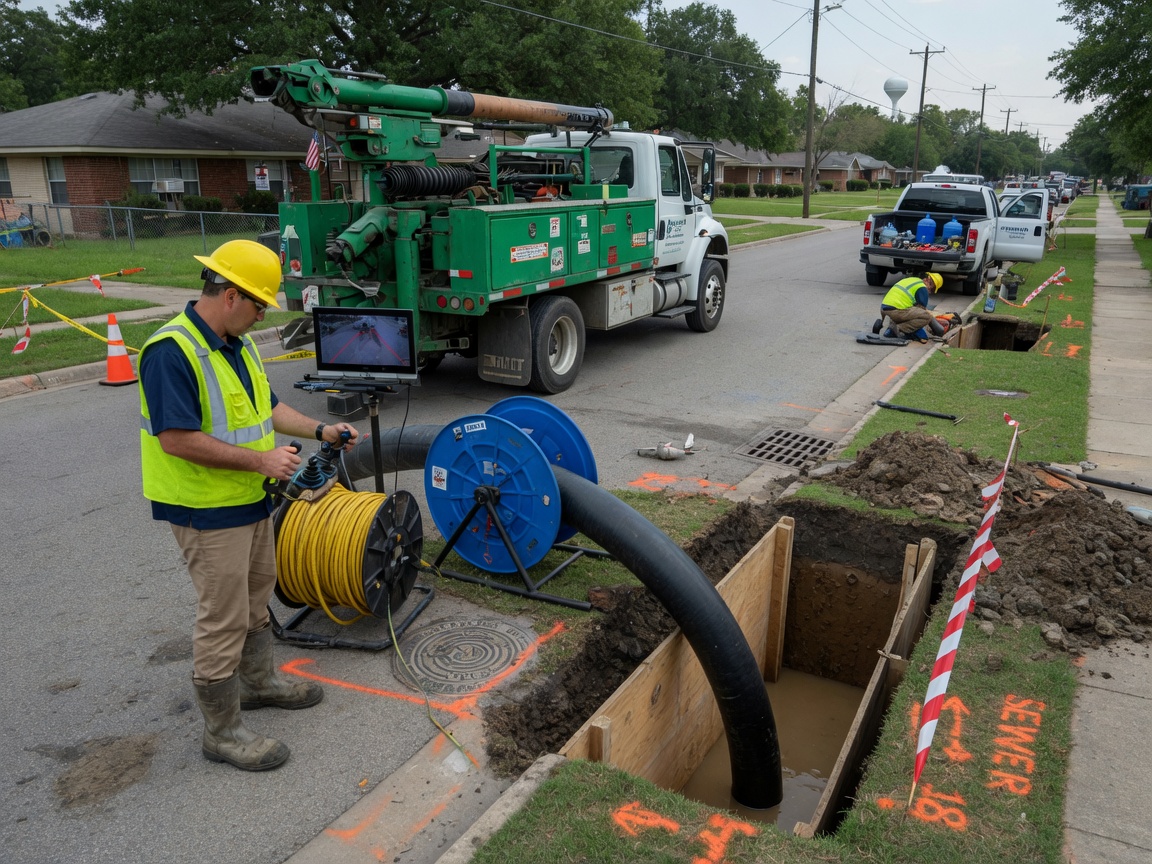
Trenchless sewer line replacement offers a modern solution for failing sewer lines across Bryan, from the historic homes in Downtown Bryan to newer developments in North Bryan and areas adjacent to College Station. This method is particularly beneficial in our humid subtropical climate, where traditional excavation can disturb established landscapes and lead to more extensive restoration work. Instead of digging a long trench, we use advanced techniques like pipe bursting or pipe lining to replace or rehabilitate your sewer pipe with minimal impact on your yard, driveways, or sidewalks. This approach is ideal for properties where extensive landscaping or structures make traditional digging impractical or undesirable, ensuring a cleaner, faster resolution to your sewer problems.
The soil conditions in Bryan, particularly the expansive clay soils common throughout Brazos County, can put significant stress on older sewer lines, leading to cracks, misalignments, and root intrusion. Over time, these issues necessitate replacement. Trenchless methods address these problems by either pulling a new pipe through the old one (pipe bursting) or inserting a cured-in-place pipe (CIPP) liner to create a new, seamless pipe within the existing structure. Both techniques utilize durable, corrosion-resistant materials designed to withstand local ground movement and prevent future root intrusion, offering a long-lasting solution that meets current plumbing codes without the mess of traditional excavation.
Understanding the existing infrastructure is key to a successful trenchless replacement in Bryan. Many homes, especially those closer to landmarks like the Brazos County Courthouse or Carnegie Library, have older sewer systems that may be made of clay or cast iron. Before any work begins, we conduct a thorough camera inspection to assess the condition of the existing pipe, identify any significant offsets, and confirm the pipe's material and diameter. This diagnostic step is crucial for determining the most effective trenchless method, ensuring the new pipe or liner will integrate seamlessly and provide reliable service for decades to come, even with the seasonal shifts in ground moisture that affect our region.
Technician insight
In Bryan, the thing that catches most people out with trenchless sewer line replacement is often the presence of older, brittle cast iron or clay pipes, especially in areas like Downtown Bryan. These older materials can sometimes complicate the pipe bursting process, requiring a more careful approach to ensure a clean burst and proper installation of the new pipe. We always conduct a thorough pre-inspection to identify these factors early.
Persistent Backups in a North Bryan Home
A homeowner in North Bryan was experiencing recurring sewer backups, especially after heavy rains common in our humid climate. We found a significant section of their clay sewer line had collapsed and was heavily infiltrated by roots from a nearby oak tree. Using pipe bursting, we replaced the damaged section with a new, seamless HDPE pipe, resolving the backup issue and preventing future root intrusion without tearing up their entire yard.
Trenchless Sewer Line Replacement Services We Offer
✓Pipe Bursting Sewer Replacement
We replace your old sewer line with a new, stronger pipe by pulling it through the existing damaged one, minimizing excavation to just two access points.
✓Cured-In-Place Pipe (CIPP) Lining
A durable epoxy-impregnated liner is inserted into your existing pipe and cured, creating a new, seamless pipe within the old one without extensive digging.
✓Sewer Line Inspection & Assessment
Before any trenchless work, we perform a detailed camera inspection to accurately diagnose the issue and determine the best repair or replacement strategy for your Bryan property.
✓Spot Repair for Sewer Lines
For isolated damage, we can perform targeted trenchless repairs, addressing specific sections of pipe without needing to replace the entire line.
✓Drainage System Integration
Ensuring your new sewer line properly connects to your existing drainage system, preventing future backups and maintaining optimal flow throughout your property.
Trenchless Sewer Line Replacement Cost in Bryan, TX
| Service | Typical Range | What Affects It |
|---|---|---|
| Sewer Line Camera Inspection | $150–$350 | Initial diagnostic to assess damage and feasibility. |
| Trenchless Pipe Lining (per foot) | $80–$250 | Price depends on pipe diameter, length, and complexity of existing damage. |
| Trenchless Pipe Bursting (per foot) | $100–$300 | Varies with pipe diameter, length, depth, and soil conditions in Brazos County. |
| Access Point Excavation & Restoration | $500–$1,500 | Cost depends on ground material (soil, concrete, asphalt) and depth. |
Ranges are typical for Bryan, TX and confirmed with an exact written quote before any work starts.
How it works
- 1
Initial Inspection and Diagnosis
We start with a comprehensive camera inspection of your sewer line to pinpoint the exact location and nature of the damage. This helps us determine if trenchless replacement is the most suitable solution for your Bryan property.
- 2
Site Preparation and Access Points
For pipe bursting, we excavate two small access pits at either end of the damaged sewer line. For pipe lining, often only one access point is needed, significantly reducing disruption to your landscape.
- 3
Trenchless Replacement Execution
Depending on the chosen method (pipe bursting or CIPP lining), we either pull a new pipe through the old one or install and cure a new liner, effectively replacing or rehabilitating your sewer line underground.
- 4
Final Connections and Testing
Once the new pipe or liner is in place, we securely connect it to your existing plumbing system and perform thorough testing to ensure proper flow and leak-free operation.
- 5
Site Restoration
We backfill the access points and restore the disturbed areas as neatly as possible, leaving your Bryan property in excellent condition with a fully functioning sewer system.
Pricing
Trenchless sewer line replacement costs vary based on the method, pipe length, and site complexity, but often offer long-term savings over traditional excavation.